[Conférence RELiJaM] « Lire la littérature française, écrire de la fiction : mon propre parcours », Ono Masatsugu, 30 mai 2026, Inalco

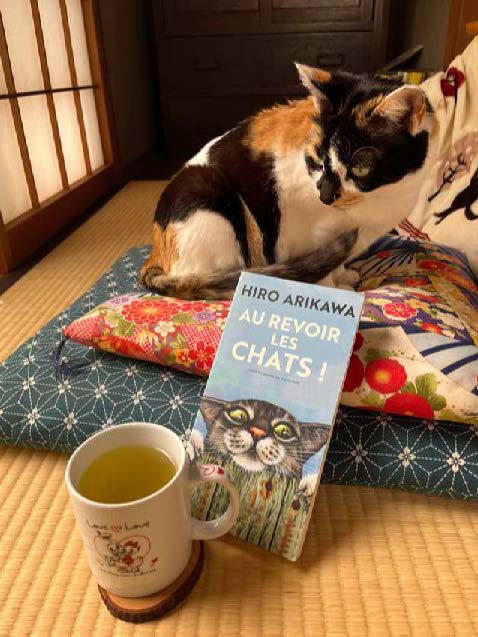
Le RELiJaM (Réseau français des études sur la littérature japonaise moderne) accueille le 30 mai 2026, à 14h, à l’Inalco, Ono Masatsugu (professeur à Waseda, écrivain et traducteur) pour une conférence dont le titre est「フランス文学を読むことと小説を書くこと――私自身を例にして」 / « Lire la littérature française, écrire de la fiction : mon propre parcours ».

La conférence pourra être également suivie en ligne. Pour obtenir le lien, veuillez envoyer un message à gerald.peloux@inalco.fr.

[Cycle de conférences] « Approches to the study of Japanese traditional festivals », Mark Teeuwen, mai 2026

Matthias Hayek a le plaisir de vous annoncer la tenue d’un cycle de conférences par Mark Teeuwen, professeur à l’Université d’Oslo et spécialiste du shintô. Mark Teeuwen est directeur d’études invité à l’EPHE-PSL pour tout le mois de mai 2026.
Il interviendra à quatre reprises, à la Fondation Maison des sciences de l’homme, 54 boulevard Raspail, 75006 Paris, à partir du lundi 4 mai.

Toutes les personnes intéressées sont les bienvenues. Un lien de connexion pour assister en ligne pourra être fourni sur demande. 
Le programme est le suivant : Approches to the study of Japanese traditional festivals

Lundi 4 mai, salle 9, 15h-17h

  1. Approaches to traditional festivals

This lecture traces the history of festival studies, from pre-war ethnograpgers like Orikuchi Shinobu to current studies of heritage professionals. After pointing out the strengths and weaknesses of these approaches, I propose a particular methodology that looks for the interplay between aspects of prayer, play, and patronage.

Jeudi 7 mai, salle 21, 16h-18h

  1. Prayer, play, and patronage in Kyoto’s Gion festival

Here I flesh out the methodology proposed in the first lecture by analysing the Gion festival in Kyoto, one of the oldest,. Largest, and most influential traditional festivals in the country. I trace the festival’s development and seek to show how its development can be explained an analysis of these three aspects.

 Jeudi 21 mai, salle 21, 16h-18h

  1. Festivals and meaning – through the lens of the Hanamatsuri in Oku Mikawa

Festivals are often explained as public expressions of symbolic meanings and values. This lectures zooms in on four discourses that have attributed specific meanings to the rural Hanamatsuri festivals between the seventeenth century and today. How can we understand these frequent shifts in signification, and to what degree do they explain changes in the festival performance?

 Jeudi 28 mai, salle 21, 16h-18h

  1. Festivals as heritage

Since 1975, traditional festivals have been designated as Intangible Folk Cultural Properties and served as emblems of Japanese culture. At the same time, the social structures that have supported festivals have eroded, both in urban and in rural areas. Rural depopulation, in particular, has forced communities to rethink and redesign, or even abandon their local festivals. This lecture addresses the effects of heritage-making and reflects on its impact.

[Café-géo] « De Hiroshima à Fukushima, guerre, nucléaire et politique au Japon », Philippe Pelletier, 14 avril 2026, Paris

Annonce du café-géo qui se tiendra mardi 14 avril 2026 de 19h à 21h autour du livre de Philippe Pelletier, De Hiroshima à Fukushima, guerre, nucléaire et politique au Japon, au Café de Flore, salle du premier étage, 172 boulevard Saint-Germain à Paris (75006). Philippe Pelletier évoquera notamment la déclaration récente de la PM Takaichi Sanae sur la « ligne rouge ».

[Rencontres de l’IFRAE] Recenser la nature dans le Japon d’Edo, 7 avril 2026, Paris

Dans le cadre des rencontres de l’Ifrae organisées par Juliette Genevaz, Matthias Hayek et Nicolas Mollard auront le plaisir de présenter l’édition critique d’une flore illustrée d’Edo qu’ils ont dirigée aux éditions Citadelles & Mazenod :

Recenser la nature dans le Japon d’Edo :
L’Album illustré de la materia medica (1828) d’Iwasaki Kan’en

Mardi 7 avril 2026
17h-18h15
Maison de la Recherche, IFRAE – Inalco, 2, rue de Lille, 75007 Paris

Accès libre sans réservation

Détail :

https://ifrae.cnrs.fr/event/recenser-la-nature-dans-le-japon-dedo-lalbum-illustre-de-la-materia-medica-1828-diwasaki-kanen

[Conférence] « The Shunpōan Incident: Forgery and Ukiyo-e Painting, Julie Nelson Davis, 9 avril 2026, UPC

La conférence de Julie Nelson Davis (University of Pennsylvania) sera consacrée à l’incident du Shunpōan, un scandale survenu en 1934 et qui marqua durablement l’étude de la peinture ukiyo-e. Faussaires, experts douteux, emballement médiatique, enjeux financiers, l’affaire réunissait tous les ingrédients d’un roman policier haletant. La conférence sera donnée en anglais.

Julie Nelson Davis (University of Pennsylvania)
The Shunpōan Incident: Forgery and Ukiyo-e Painting
Jeudi 9 avril 2026, 17h-18h30
Université Paris Cité, 5 rue Thomas Mann, 75013 Paris, Bâtiment C, 4e étage, salle 479C

Presentation

The “greatest discovery” cried the headline in the Asahi Shinbun on April 26, 1934: two Sharaku paintings found in the Shunpōan collection. This private collection held seventeen rare ukiyo-e paintings—all masterpieces—and would be going to auction in May. Professor Sasakawa Rinpū verified their quality and the organizers produced a deluxe, full-color catalogue. Rumor had it that these paintings would be brought to the committee on Important Cultural Properties. During the auction preview, more rumors began—that these were not masterpieces, but forgeries. This talk examines the Shunpōan Incident, presents new evidence for the case, and considers the impact on the field ever since.  

Profile

Julie Nelson Davis is the Paul F. Miller, Jr. and E. Warren Shafer Miller Professor of History of Art and Chair of the Department of the History of Art at the University of Pennsylvania. Her research engages Japanese prints, illustrated books, and paintings from the eighteenth through the twentieth century. Davis is author of Utamaro and the Spectacle of Beauty (2007, 2021), Partners in Print: Artistic Collaboration and the Ukiyo-e Market (2014), and Picturing the Floating World: Ukiyo-e in Context (2021), along with numerous articles and essays. Davis has received fellowships from the Sainsbury Institute for the Study of Japanese Arts and Cultures, the Clark Art Institute, and the Guggenheim Foundation, among others. Currently, she is completing a book about imitation, homage, and fabrication in ukiyo-e and conducting research for a second project on the history of the illustrated book in Japan. 

Contact : marianne.simon-oikawa@u-paris.fr

[Conférence] « Madness at Home in Tokyo: The Psychiatrist, the Patient, and the Family in Tokyo, 1920-1945 », 10 avril 2026, Collège de France

Monsieur Baba (Bibliothèque d’études japonaises, Collège de France) a le grand plaisir de vous annoncer une conférence d’Akihito SUZUKI (Université de Tokyo), invité par le professeur Patrick BOUCHERON, conférence intitulée :

« Madness at Home in Tokyo: The Psychiatrist, the Patient, and the Family in Tokyo, 1920-1945 »

Vous en trouverez plus des informations et l’affiche sur le lien suivant :

https://www.college-de-france.fr/fr/agenda/conferencier-invite/madness-at-home-in-tokyo-the-psychiatrist-the-patient-and-the-family-in-tokyo-1920-1945/madness-at-home-in-tokyo-the-psychiatrist-the-patient-and-the-family-in-tokyo-1920-1945

Collège de France, Amphithéâtre Maurice Halbwachs, Site Marcelin Berthelot, Paris – 17h à 18h.
En libre accès, dans la limite des places disponibles

[Conférence] « The Shunpōan Incident: Forgery and Ukiyo-e Painting », Julie Nelson Davis, 9 avril 2026, Paris

Marianne Simon-Oikawa a le plaisir de vous annoncer une conférence de Julie Nelson Davis (University of Pennsylvania) jeudi 9 avril 2026, de 17h à 18h, consacrée à l’incident du Shunpōan, un scandale survenu en 1934 et qui marqua durablement l’étude de la peinture ukiyo-e. Faussaires, experts douteux, emballement médiatique, enjeux financiers, l’affaire réunissait tous les ingrédients d’un roman policier haletant. La conférence sera donnée en anglais.

Julie Nelson Davis (University of Pennsylvania)
The Shunpōan Incident: Forgery and Ukiyo-e Painting

Presentation

The “greatest discovery” cried the headline in the Asahi Shinbun on April 26, 1934: two Sharaku paintings found in the Shunpōan collection. This private collection held seventeen rare ukiyo-e paintings—all masterpieces—and would be going to auction in May. Professor Sasakawa Rinpū verified their quality and the organizers produced a deluxe, full-color catalogue. Rumor had it that these paintings would be brought to the committee on Important Cultural Properties. During the auction preview, more rumors began—that these were not masterpieces, but forgeries. This talk examines the Shunpōan Incident, presents new evidence for the case, and considers the impact on the field ever since. 

Profile

Julie Nelson Davis is the Paul F. Miller, Jr. and E. Warren Shafer Miller Professor of History of Art and Chair of the Department of the History of Art at the University of Pennsylvania. Her research engages Japanese prints, illustrated books, and paintings from the eighteenth through the twentieth century. Davis is author of Utamaro and the Spectacle of Beauty (2007, 2021), Partners in Print: Artistic Collaboration and the Ukiyo-e Market (2014), and Picturing the Floating World: Ukiyo-e in Context (2021), along with numerous articles and essays. Davis has received fellowships from the Sainsbury Institute for the Study of Japanese Arts and Cultures, the Clark Art Institute, and the Guggenheim Foundation, among others. Currently, she is completing a book about imitation, homage, and fabrication in ukiyo-e and conducting research for a second project on the history of the illustrated book in Japan.

Contact : marianne.simon-oikawa@u-paris.fr

[Conférence] « La culture transgenre au Japon – L’exemple des onnagata », 18 avril 2026, MCJP, Paris

L’équipe des études japonaises de la Maison de la culture du Japon à Paris a le plaisir de vous inviter à notre prochaine conférence.

Samedi 18 avril 2026 à 14h00

« La culture transgenre au Japon – L’exemple des onnagata « 

日本の性別越境文化 ―女方とその周辺―

La culture transgenre au Japon – L’exemple des onnagata – Maison de la culture du Japon à Paris

Spécialiste de l’histoire du genre et de la sexualité et elle-même femme trans, Junko Mitsuhashi nous parlera de la culture transgenre au Japon, de son histoire et de son actualité, en se concentrant sur le kabuki et les acteurs interprétant les rôles féminins : les onnagata. Dans les temps anciens, des personnes en dehors des normes de genre avaient un rôle social en tant que chamans, intermédiaires entre les dieux et les humains. Leurs fonctions s’étendent ensuite aux arts du spectacle, à l’accueil des clients en restauration, à la prostitution… Le Japon, caractérisé par une grande liberté religieuse, a ainsi connu un développement important de la culture transgenre, toujours bien présente aujourd’hui. Cette conférence sera modérée par Camille Lenoble (docteur en études japonaises de l’université de Strasbourg).

■ Intervenante : 

Junko Mitsuhashi, née en 1955 à Chichibu dans la préfecture de Saitama.

À partir d’environ 1995, elle a commencé à donner des conférences et à écrire en tant que femme trans. En 2000, elle est nommée chargée de cours à la faculté des lettres de l’Université Chûo (recherche sur la société contemporaine), devenant la première enseignante universitaire transgenre au Japon. En 2005, elle assure en tant que chargée de cours le premier cours universitaire spécialisé en études sur le transgenre à l’Université Ochanomizu. Chargée de cours à l’université de Meiji jusqu’en mars 2026.

Spécialité : histoire du genre et de la sexualité, en particulier l’histoire sociale et culturelle des cultures de transgression des genres au Japon

■ Modérateur : 

Camille Lenoble, docteur en études japonaises de l’Université de Strasbourg. Il est spécialiste de l’histoire du genre et des sexualités. Ses recherches portent plus précisément sur les pratiques et les représentations du travestissement, ainsi que sur les mobilités sociales de sexe dans la société du Japon moderne (1868-1945).

Réservations en ligne (gratuit) : Choix des places [Maison de la culture du Japon à Paris | 18.04.2026 – 14:00 | La culture transgenre au Japon] – Maison de la culture du Japon à Paris

*Cette conférence est organisée dans le cadre de l’événement : MEET KABUKI – The Art of « Onnagata » Europe Tour 2026

[Conférence] « The Power of Touch: Movable Books in Nineteeth-Century Japan », 2 avril 2026, Paris

Dans le cadre du cycle de conférences de la Graduate School East Asian Studies, nous accueillerons le jeudi 2 avril prochain Laura Moretti, Professeure à l’Université de Cambridge.

Cette conférence a lieu en salle Léon Vandermeersch de l’UFR LCAO (481 C), bâtiment des Grands Moulins, 5 rue Thomas Mann, 75205 Paris cedex 13, de 17h00 à 18h30. 

Vous pouvez également la suivre sur le lien zoom suivant : 

https://u-paris.zoom.us/j/82935801024?pwd=cDJubHVoWmEwb1ZmclIxVUhlZUVHQT09

ID de réunion: 829 3580 1024

Code secret: 068941

The Power of Touch: Movable Books in Nineteenth-Century Japan

Conférencière : Laura Moretti (University of Cambridge, Faculty of Asian and Middle Eastern Studies)

Résumé : In 1809 cultural lion Santō Kyōden and prominent illustrator Utagawa Toyokuni spiced up the world of the Japanese commercial book with what would have most likely appeared as a curious gimmick: a flap. This flimsy sheet of paper pasted on the printed page acted as an invitation for the reader to become an agent of visual and narrative change. We might be tempted to discard it as a vapid variation of turning the page. Yet, the nineteenth-century Japanese print industry was enthralled by the allure of interactivity untethered by this peculiar design and experimented with a variety of movable components in both books and single-sheet prints. This talk interrogates the material qualities of this rich textual tradition to explore the meanings unleashed by their interactive nature. How was the craze for quick changes on the kabuki stage remediated in print? How could revenge be taken in one’s hand, literally? How could space be expanded in one’s hand and to what effects? What did it mean to uncover naked bodies and unfold sensuous pleasures by operating the printed surface? How can these materials be placed in the wider ecology of playthings? By exploring these questions, I hope to provoke wider reflections on the act of reading and on the power of touch in the age of the digital image, while challenging the too-oft invoked association of movable books with children’s literature.  

Bio : Laura Moretti is Professor of Early Modern Japanese Literature and Culture at University of Cambridge. Her research projects are inherently interdisciplinary, placed at the intersection of literature, art history, book history, textual scholarship, and palaeography. Working with both books and visual media, including woodblock prints and board games, and combining rigorous close reading of a wide range of archival materials with bold intellectual arguments, Professor Moretti’s research challenges our understanding of literature and wishes to retrieve textual traditions that have been silenced after the encounter of Japanese literature with « modernity”. 

Professor Moretti’s first book in English, Recasting the Past: An Early Modern Tales of Ise for Children (Brill, 2016) focusses on how a canonical text of Japanese court literature has been infused with new life in the second half of the eighteenth century when it was remediated as a piece of graphic narrative. Her second book, Pleasure in Profit. Popular Prose in Seventeenth-Century Japan (Columbia University Press, 2020), the first comprehensive study of the birth of Japanese commercial publishing, recasts books as tools for knowledge making, arguing that popular prose engaged its audience cognitively as well as aesthetically and emotionally to satisfy a burgeoning curiosity about the world.

Au plaisir de vous y retrouver nombreux.

Marianne Simon-Oikawa, Ken Daimaru et Gilles Guiheux

[Conférence] « Les traductions de littérature japonaise pendant la guerre froide », Kenichi ABE, 24 mars 2026, Collège de France

Invité par l’assemblée du Collège de France sur proposition du professeur William MARX, conférence de Monsieur Kenichi ABE, professeur à l’université de Tokyo, le 24 mars 2026 de 15h à 16h sur « Les traductions de littérature japonaise pendant la guerre froide ».

Amphithéâtre Mireille Delmas-Marty, Collège de France, 11 place Marcelin-Berthelot, 75005 Paris